
Title: New Trends in the Hong Kong IPO Market Rebound: A Resonance of Improved Liquidity and Policy Dividends
Keywords: Hong Kong IPOs, primary market, Chapter 18C, A+H listings, technology companies, cornerstone investors, Hong Kong market rebound
Main text:
Introduction
So far this year, the Hong Kong market has shown a clear pattern of recovery and rebound, driven by the dual forces of marginally improved liquidity and the continued release of policy dividends. In the primary market in particular, the number of IPOs, the amount raised, and investor participation have all increased significantly, reflecting not only a gradual recovery in market confidence, but also the renewed appeal of Hong Kong as an international capital market. With a concentrated wave of technology companies going public, the accelerated entry of long-term capital, and the continued rise of the “A+H” listing model, the Hong Kong market is entering a new round of structural opportunities.
IPO Numbers and Fundraising Scale Grow in Tandem
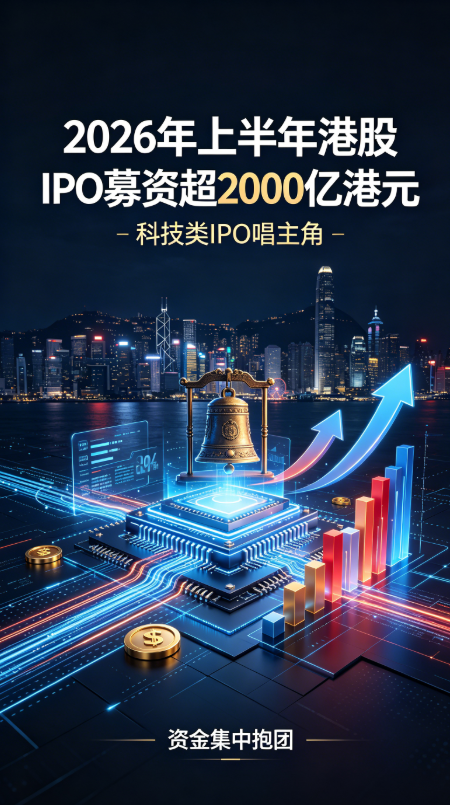
According to Wind data, as of June 24 this year, 72 companies had completed initial public offerings (IPOs) in Hong Kong, a sharp increase from 43 in the same period of 2025; total funds raised reached HK$153.62 billion, up 41.1% year on year. These figures show that the Hong Kong IPO market is recovering not only in “quantity” but also in “quality.”
From a market logic perspective, the rise in IPO activity is not driven by a single factor, but by the resonance of policy, capital, and valuation. On the one hand, HKEX has continued to refine the Chapter 18C regime for specialist technology companies, further lowering the listing threshold for hard-tech companies, improving review and issuance efficiency, and providing a more suitable financing channel for technology firms that are still in their growth phase, have heavy R&D spending, and have yet to fully release profitability. On the other hand, the external environment is also improving, with the Federal Reserve entering a rate-cutting cycle and southbound capital continuing to flow in, keeping overall Hong Kong market liquidity relatively ample. In addition, after the earlier adjustment, valuations in the Hong Kong technology sector have become more attractive, providing a better pricing basis for new share offerings.
Technology Companies Become the Main Force Behind IPOs
From an industry structure perspective, Hong Kong IPOs this year have clearly shown a feature of “higher technology content.” Among the 72 companies, 23 were from the information technology sector, with total fundraising reaching HK$91.67 billion, accounting for nearly 60% of total proceeds. In particular, fundraising in the semiconductor products and equipment sector reached HK$36.02 billion, ranking first among all sub-sectors.
This trend sends two important signals: first, global capital is paying more attention to China’s technological manufacturing capabilities; second, Hong Kong’s institutional reforms are proving effective in supporting specialist technology companies to list. For industries such as semiconductors, advanced electronics, and communications equipment, companies often have long R&D cycles, large capital expenditure requirements, and strong needs for global expansion. Hong Kong provides a financing platform that better matches their stage of development. The clustering of high-quality innovative technology companies also helps improve the overall structure of Hong Kong-listed companies, enhancing index representativeness and long-term investment value.
Long-Term Capital and Cornerstone Investment Appetite Increase
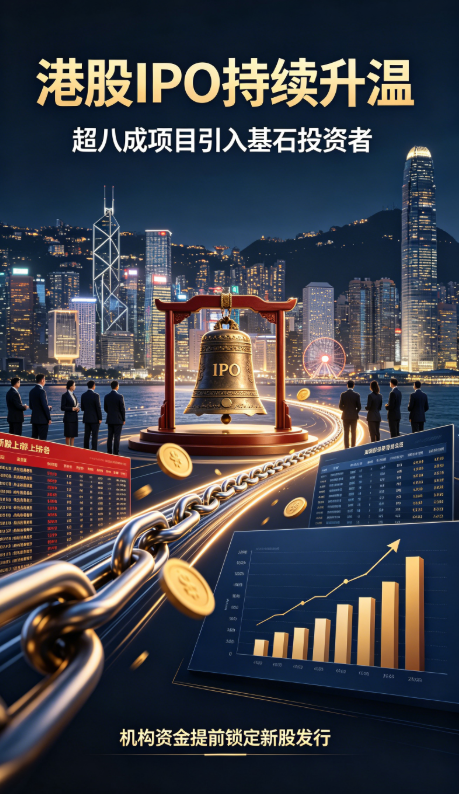
Another highlight of this year’s Hong Kong IPO market is the significant increase in cornerstone investor participation. Data show that 84.7% of IPO deals introduced cornerstone investors, and cornerstone subscription funds accounted for 40.5% of total funds raised. The participating entities included diversified long-term institutions such as foreign asset managers, Chinese insurers, industry leaders, and sovereign wealth funds. Among them, UBS Global Asset Management (Singapore) Ltd. appeared frequently, participating in the cornerstone investor lists of 11 companies in total.
The heightened enthusiasm for cornerstone investment indicates a strong consensus among professional capital on the long-term growth potential of Hong Kong’s hard-tech sector. Compared with short-term trading capital, cornerstone investors place greater emphasis on a company’s industry position, technological barriers, and future growth prospects. Their continued allocation not only helps stabilize the pace of issuance, but also creates a stronger valuation anchor for the market. For the Hong Kong market, the continued inflow of long-term capital is an important foundation for improving pricing efficiency and strengthening financing functions.
A+H Listings Accelerate, and International Demand Grows
It is worth noting that among the 72 Hong Kong IPO companies this year, 21 were already listed in the A-share market, accounting for 29.2%. Of these, 10 were information technology companies, covering cutting-edge sectors such as semiconductors, advanced electronics, and communications equipment, with combined fundraising of HK$59.8 billion. The accelerated progress of the “A+H” dual-listing model reflects a renewed assessment of the value of the Hong Kong market by high-quality A-share companies.
For A-share companies, choosing to list in Hong Kong is both an extension of financing channels and an important part of their globalization strategy. As a mature international capital market, Hong Kong can help companies connect with global investors, enhance overseas brand influence, and better match funding needs for overseas manufacturing, global R&D, and cross-border M&A. At the same time, the continued optimization of the overseas listing filing regime for A-share companies has significantly reduced compliance and time costs. Against the backdrop of global supply chain restructuring, innovative technology companies using Hong Kong to connect international capital, industrial capital, and strategic resources has become a practical and efficient path.
Conclusion
Overall, the rebound in the Hong Kong IPO market is not simply a cyclical recovery, but the result of institutional optimization, capital inflows, and industrial upgrading working together. At present, there are still 158 A-share companies in the pipeline, with a sufficient reserve of projects; meanwhile, expectations for the return of Chinese concept stocks remain stable, and favorable measures such as listing fee reductions and stamp duty adjustments continue to deliver policy dividends. Looking ahead to the second half of the year, the Hong Kong IPO market is expected to extend its recovery trend, and technology companies as well as “A+H” projects will remain the core focus of the market.
It is foreseeable that as more high-quality innovative technology companies list in Hong Kong, the market’s asset structure will be further optimized, and the linkage between capital and industry will become even closer. Hong Kong is rapidly evolving from a “financing platform” into a “connector between technology and global capital,” and its long-term value is worthy of continued attention.