
 <\/div> <\/div>
Hong Kong stock IPO heat rises again: Technology-led, structural upgrading, and capital divergence moving in parallel
Keywords:<\/strong> Hong Kong stock IPOs, A+H listings, AI, semiconductors, market divergence, HKEX, international capital, new economy
Introduction
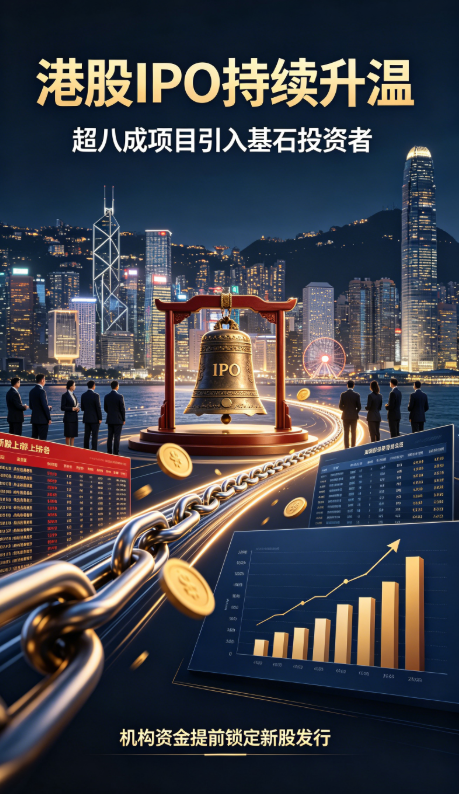
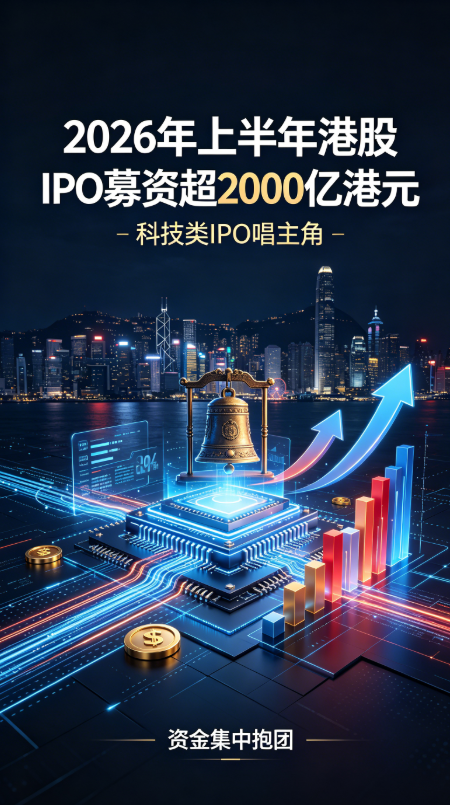
As 2026 begins, the Hong Kong stock IPO market has heated up significantly, becoming one of the most closely watched segments in the global capital markets. In late June alone, several companies listed in quick succession, creating a long-missed scene of "queueing for issuance" in the market. Wind data show that in the first half of 2026, the number of companies that completed IPOs in the Hong Kong market increased substantially, and fundraising规模 also broke the historical同期 high, reflecting that Hong Kong's capital market is entering a new stage of evolution from "recovering activity" to "improving quality."
Unlike previous rounds, this wave of Hong Kong stock IPO enthusiasm is not just a simple rebound in quantity, but also the result of multiple factors coming together: an improved supply structure, concentrated industry themes, and the revaluation of Chinese assets by international capital. Hard-tech sectors such as AI, semiconductors, robotics, and advanced manufacturing have become the focus of the market, while the A+H listing model continues to strengthen. At the same time, capital concentration has risen noticeably: leading projects are being chased, while some companies in traditional industries face valuation pressure and fading trading activity. The Hong Kong stock IPO market is entering a pricing phase that places greater emphasis on scarcity, technological barriers, and industry prospects.<\/p>
1. IPO supply is recovering, and the Hong Kong market is back among the global leaders
From a global perspective, the structure of the IPO market changed significantly in the first half of 2026. Nasdaq continued to lead thanks to ultra-large technology projects and AI infrastructure themes, while HKEX IPO activity steadily rebounded to second place globally. A relevant Ernst & Young report shows that HKEX's fundraising volume in the first half of the year reached a five-year high and even exceeded the total of the same period over the previous four years, a clear sign of market recovery.<\/p>
This rebound is not accidental, but the gradual release of Hong Kong's long-term institutional advantages. On the one hand, HKEX's ability to support A+H, new economy, 18A, 18C, and specialist technology companies has continued to improve, enabling different types of high-quality companies to find relatively suitable listing paths. On the other hand, improved secondary-market turnover provides the necessary liquidity support for primary-market issuance pricing. For issuers, Hong Kong is not only a financing platform, but also an important window connecting international capital and enhancing global visibility.<\/p>
Even more noteworthy is that the "quality" of Hong Kong stock IPO supply is improving at the same time. Over the past few years, the market's expectations for quality assets were relatively weak, but since 2026, the listing of mainland A-share leaders in Hong Kong, the accelerated arrival of new economy companies, and the concentrated entry of upstream and downstream companies in the AI industry chain have given the Hong Kong new-share market a much stronger industry identity. In other words, Hong Kong is shifting from "whether there are projects" to "whether there are good projects."
2. Technology assets are the main thread, and the market's pricing logic is changing
If a rebound in IPO numbers shows that market enthusiasm has returned, then the concentrated emergence of technology assets marks a deeper change in the pricing logic of Hong Kong stock IPOs. In the first half of 2026, companies in large AI models, semiconductor chips, AI servers, optical communications, and electronic components became the market's main characters, and investors' focus clearly expanded from traditional consumption and the property chain to technological innovation and advanced manufacturing.<\/p>
Behind this change is a migration in capital allocation preferences. Global capital is currently looking for Chinese assets with long-term growth potential, technological barriers, and a strategic position in the industrial chain, and AI and semiconductors happen to embody the dual attributes of "high prosperity + high certainty narrative." In particular, as some AI model companies and related application companies have listed, the market has begun to move from a single-point concept to a full industrial-chain perspective. Investors are no longer just looking at "stories"; they are paying more attention to business models, technical implementation capabilities, and industry positioning.<\/p>
From a market-performance perspective, this preference is already very visible. Some companies highly related to AI posted significant gains on their first trading day, while companies with weaker technology characteristics performed flatly or even faced breakage pressure. The average post-listing gain far exceeding the median also shows that market returns are mainly coming from a small number of projects with scarcity and growth imagination. In other words, the Hong Kong new-share market is no longer a broad-based rally; instead, a mechanism for "pricing quality assets" is being re-established.<\/p>
3. Capital is clustering heavily, and divergence is becoming the new normal
One of the most striking features of this round of Hong Kong stock IPOs is the high concentration of capital. The top ten IPOs contributed nearly half of the fundraising amount, and most of them were A+H secondary listings. This means that large leading enterprises, with brand recognition, profitability, and industry position, are more likely to gain recognition from institutional and international capital and become the core reference points for market pricing.<\/p>
At the same time, stratification is also emerging within the technology sector. Companies with core technology, clear application scenarios, and industrial scarcity often gain strong recognition during the issuance stage; companies lacking barriers and whose business models have not been fully validated are more likely to return to rational trading after listing. The market is not short of money; it is short of sufficiently "hard" projects. Capital clustering is, in essence, a concentrated vote for certainty, growth, and scarcity.<\/p>
This divergence places higher demands on issuers. In the past, as long as a company caught a hot theme, it could often attract outsized attention; now, the market will more carefully examine whether the company is truly positioned in a key node of the industrial chain, whether it has the ability to sustain R&D investment, and whether it has a verifiable path for revenue growth. For issuers, an IPO is no longer just a financing move, but a public test of their business model and industry position.<\/p>
4. The A+H model continues to gain momentum, and Hong Kong's absorption capacity is strengthening
The A+H listing path continued to strengthen in 2026 and has become an important way for large leading companies to raise cross-border capital. For mainland A-share companies, listing in Hong Kong not only broadens financing channels, but also optimizes the shareholder base, raises international visibility, and gives access to more global institutional investors through the Hong Kong market.<\/p>
From the perspective of the Hong Kong market itself, more A+H projects also help enhance market stability and representativeness. The addition of large leading companies has raised the average fundraising scale and industry level of Hong Kong stock IPOs, and has also enabled the Hong Kong market to form a more complete system of investable targets across technology, manufacturing, and consumer sectors. More importantly, A+H companies usually have strong earnings foundations and governance capabilities, which can to some extent ease concerns about the quality of new listings.<\/p>
At the same time, HKEX has continued to push institutional reforms, providing a more friendly listing environment for new economy companies. Whether it is lowering the market-capitalization threshold for companies with different voting rights, relaxing secondary-listing requirements, or expanding the scope of confidential filings, all of these reflect Hong Kong's proactive response to the needs of technological innovation, capital efficiency, and internationalization. These institutional arrangements will further enhance the appeal of the Hong Kong market to companies in artificial intelligence, biotechnology, and advanced manufacturing.<\/p>
5. There is still plenty to watch in the second half of the year, but the window and absorption capacity matter more
Looking ahead to the second half of the year, the Hong Kong stock IPO market will most likely remain active, but the pace may not be evenly distributed; it is more likely to show a "window-based issuance" pattern. In other words, when the market environment is favorable, turnover is active, and peer listings are performing steadily, issuance will accelerate noticeably. Once external volatility increases or risk appetite among funds declines, the pace of issuance will also slow down accordingly.<\/p>
In terms of project pipeline, Hong Kong still has a sufficient reserve of potential listings, with a substantial number of companies in the queue, and many projects concentrated in the sectors that the market is paying most attention to: AI, semiconductors, biotech, and advanced manufacturing. If international capital continues to reallocate toward Chinese assets in the second half of the year, coupled with relatively loose liquidity in the Hong Kong market, the market is expected to maintain this year's high level of prosperity and may even move toward its best performance in recent years.<\/p>
But it should be noted that enthusiasm does not mean a broad-based rally. The core variables for the future Hong Kong stock IPO market are not just the number of listings, but also issuance pricing, the quality of cornerstone investors, post-listing absorption capacity, and changes in macro risk appetite. For issuers, the ability to clearly explain their industry positioning, deliver on growth expectations, and continue to generate results after listing will directly determine whether they can truly become high-quality assets recognized by the market.<\/p>
Conclusion
Overall, the 2026 Hong Kong stock IPO market has moved from a "recovery rebound" into a new stage of "structural upgrading." In terms of quantity, IPO supply has increased significantly and fundraising volume has returned to high levels; in terms of quality, technology and advanced manufacturing have become the dominant directions, and the A+H model continues to strengthen; on the capital side, international capital and southbound funds are jointly driving the re-pricing of China's hard-tech assets.<\/p>
Going forward, competition in the Hong Kong stock IPO market will no longer be a simple race on issuance speed, but a competition over asset quality, industry scarcity, and pricing power. It is foreseeable that, as more high-quality technology companies list in Hong Kong, the Hong Kong market will further consolidate its position as the international financing center for Chinese companies and is also likely to deliver one of its most impressive IPO scorecards in recent years in 2026.<\/p>