
Deep Divergence in Hong Kong Stocks in the first half of the year: Behind the rebound of Hang Seng Tech, Structural Pressure Remains Unresolved
Key words: Hang Seng Tech Index, Hong Kong Stock Market, AI Industry Chain, Tightened Liquidity, Structural Differentiation, Technology Stocks, Outlook for the Second Half of the Year
Introduction
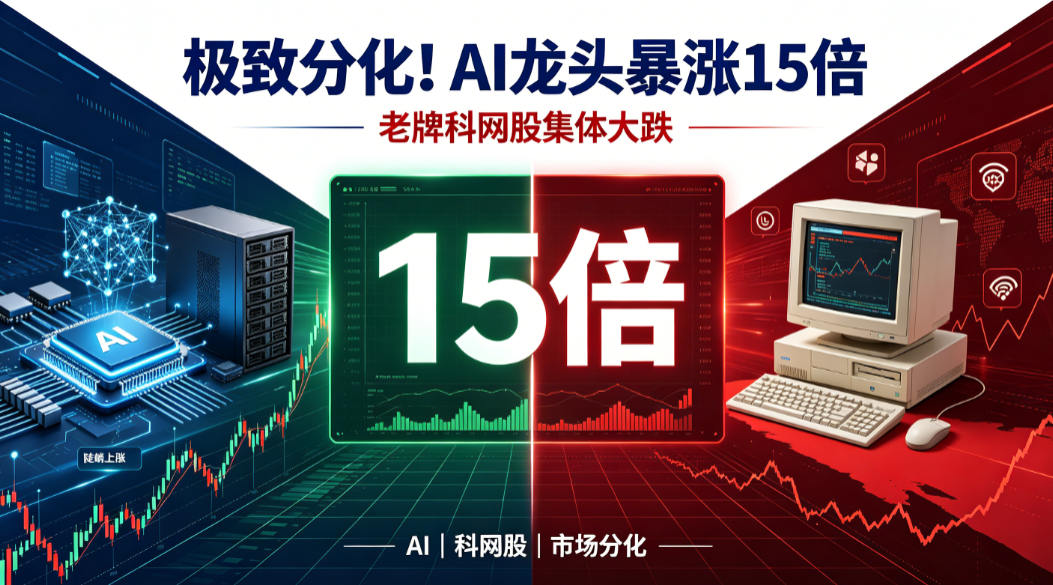
< p > < img SRC = "/ data/uploads/picture / 2026-06-30 / ai_leader_15x_rush_old_tech_fall_cover PNG" Alt = "hang seng index and stock technology stocks differentiation market sketch" > < / p > What is more worth noting is that in the first half of the year, the Hang Seng Tech Index did not decline simultaneously within the index. Instead, it presented a very distinct differentiation pattern: on one side, AI upstart and hard-tech companies rose against the trend, while on the other side, core weighted stocks such as traditional Internet giants and new energy vehicle companies continued to be under pressure. This differentiation not only reflects the shift in capital preferences but also reveals that the pricing logic of Hong Kong stocks is undergoing a deep adjustment.
1. The index rebound is limited, and the overall situation remains weak in the first half of the year. From the perspective of market rhythm, the rebound of the Hang Seng Tech Index at the end of June was more due to a technical repair after an oversold situation rather than a comprehensive improvement in fundamentals. A drawdown of over 20% within the year indicates that the market's risk appetite for Hong Kong-listed technology stocks remains relatively low. Especially against the backdrop of global technology assets generally benefiting from the AI wave, the Hang Seng Tech Index has clearly fallen behind, indicating that there is a certain mismatch between its composition and structure and the main line of global mainstream technology investment.
This misalignment is not a short-term phenomenon but the result of long-term accumulation. In the weight composition of the Hang Seng Tech Index, sectors highly related to domestic demand such as the Internet, e-commerce, new energy vehicles and new consumption account for a relatively high proportion, while the allocation in more resilient sectors such as AI hardware, computing power infrastructure and external demand benefit chains is relatively limited. In other words, when global funds were repricing around the AI industry chain, the Hong Kong technology index did not fully capture the dividends of this round of market rally.
II. The Rise of New AI Players puts Pressure on Traditional Heavyweight Stocks
In the first half of this year, there was an extreme divergence within the constituent stocks of Hang Seng Tech. A few new AI players have emerged as winners. Among them, the leading general large model company, Zhipu, saw a significant increase of 1588% in the first half of the year. Hard-tech stocks such as integrated circuit manufacturer Hua Hong Grace, general artificial intelligence company MINIMAX, and AI server provider Lenovo Group also performed outstandingly. The common feature of these companies lies in their close connection with the AI industry chain, computing power demand and the logic of domestic substitution, and they have stronger growth expectations and policy imagination space.
In contrast, traditional Internet leaders and consumer technology companies generally weakened. Tencent Holdings plunged by 29% in the first half of the year, while Alibaba, Meituan and Kuaishou all dropped by more than 30%. New energy vehicle manufacturers also experienced significant declines. Xpeng Group dropped by nearly 40%, while BYD and Li Auto both fell by more than 20%. Most of these enterprises are confronted with problems such as a slowdown in demand, intensified competition and underwhelming profit recovery, which have led to a continuous downward revision of their valuation centers in the market.
This kind of ";" "Old and new differentiation";" This means that the investment logic of the technology sector in the Hong Kong stock market has shifted from" "Traffic and User expansion" "Turn to";" "Computing power, technology and industrial chain support" . The market is not denying the technology sector; rather, it is redefining it. "Technology" The connotation. Whoever can secure a position in the AI wave, the localization of chips and the upgrading of high-end manufacturing will be more likely to be pursued by funds.
Iii. Fundamental Mismatch and liquidity Tightening jointly suppress the Hong Kong stock market Institutions generally believe that the core reason for the weak performance of the Hong Kong stock market in the first half of the year lies in the superimposition of the divergence in fundamentals and the tightening of domestic and foreign liquidity.
Firstly, the core weighted assets of the Hong Kong stock market are highly bound to the domestic consumption and domestic demand cycles. However, the pace of domestic demand recovery in the first half of the year was not strong, and sectors such as real estate, consumption, and Internet advertising still face pressure. This means that even if the global technology sector rises due to AI, it is difficult for the Hong Kong stock market to form a structural resonance of synchronous growth. On the contrary, the reality of weak domestic demand is fully reflected by the index, becoming an important factor suppressing the overall performance.
Secondly, the liquidity environment has not been as comprehensively loose as the market had previously expected. Previously, the market generally expected that the weakening of the US dollar, the return of overseas funds and the continuous increase of southbound funds would provide significant support for the Hong Kong stock market. However, the actual situation is that the US dollar has been stronger than expected, and the monetary policies of some overseas central banks have turned tight. As a result, both foreign capital and southbound capital inflows have weakened. The tightening of the capital market not only weakens the elasticity of valuation repair but also makes the market more prone to amplifying fluctuations when facing negative news.
The Hong Kong stock market itself has the attribute of offshore finance and is extremely sensitive to changes in global liquidity. When the risk appetite of external funds declines, Hong Kong stocks with valuations in the medium to low range will not automatically gain ";" "Buy when it's cheap. The support, on the contrary, will fall into a continuous fluctuation due to the lack of trend catalysis.
Whether it can be repaired in the second half of the year depends on the structure rather than the overall situation
Looking ahead to the second half of the year, whether the Hong Kong stock market can break out of the current predicament does not depend on whether the index can rise generally as a whole, but on whether structural opportunities can continue to spread. China Galaxy Strategy believes that the performance of Hong Kong stocks is expected to continue the structural recovery trend, with the overall profit growth rate improving compared to 2025. However, the differentiated pattern will still be the main theme.
From the perspective of investment directions, the AI industry chain, upstream resources, and some prosperous sectors are still expected to be the main drivers of profit growth. Ai-related companies still have strong performance elasticity, benefiting from the expansion of global computing power demand, the digital transformation of enterprises and the advancement of domestic substitution. Upstream resources may be supported by the mismatch between supply and demand, price recovery and cycle repair. Meanwhile, some enterprises with external demand attributes, manufacturing capabilities and overseas expansion advantages may also benefit from the global industrial chain reconstruction.
However, for traditional consumption, the real estate chain and some Internet platforms, a full recovery still requires clearer macro signals. That is to say, the opportunities in the Hong Kong stock market in the second half of the year are more likely to come from" Certainty in a few directions Rather than "..." The overall market has fully recovered. .
Conclusion Overall, the rebound of the Hang Seng Tech Index at the end of June was more like a phased correction of the previous oversold situation rather than the starting point of a trend reversal. The sharp divergence of technology stocks in the Hong Kong stock market in the first half of the year indicates that the market is re-screening assets with true growth certainty. The rise of new AI players and hard-tech companies, while traditional Internet and new energy vehicles are under pressure, is not only a sector rotation but also a reshaping of the valuation system and industrial logic.
For investors, the key to the Hong Kong stock market in the future is not to chase the short-term fluctuations of the index, but to seize structural opportunities, pay attention to the ability to realize profits, the prosperity of industries and changes in capital preferences. Only when the fundamentals are restored, liquidity improves and the industry's prosperity resonates can the technology sector of the Hong Kong stock market truly embark on a more sustainable upward trend.